Do Life Exist Beyond Solar System ?
Thousands of exoplanets in habitable zones suggest potential for life, while extremophiles on Earth demonstrate life’s resilience in harsh conditions. Mars exploration and the study of moons like Europa and Enceladus indicate possible habitats,
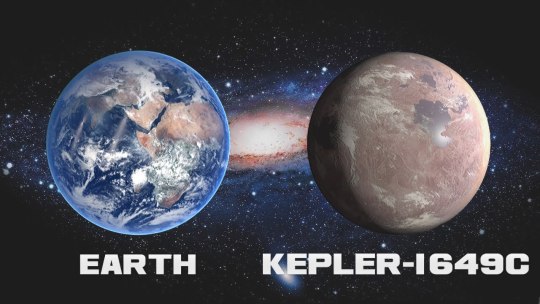
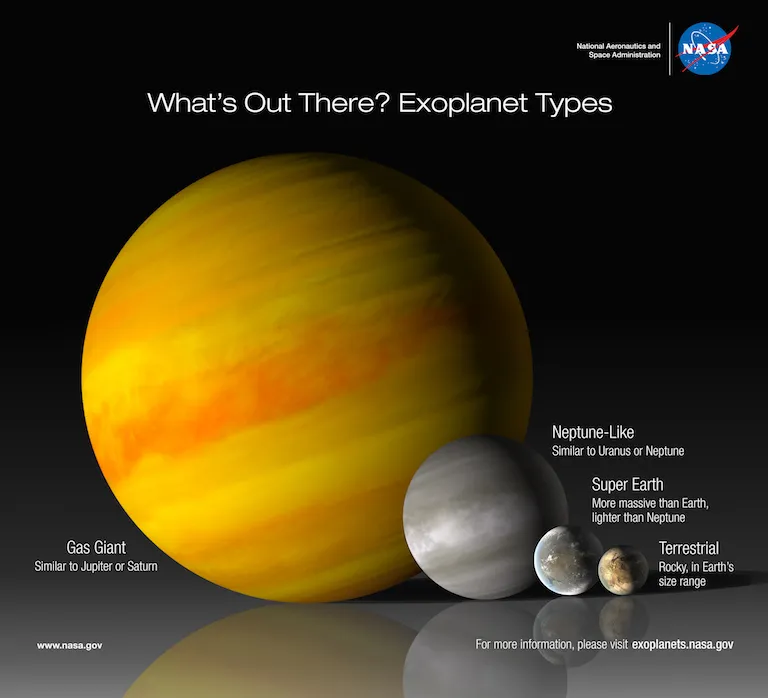
Type Of Exoplanets :
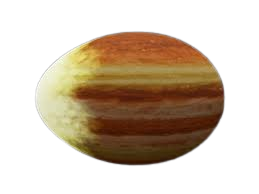
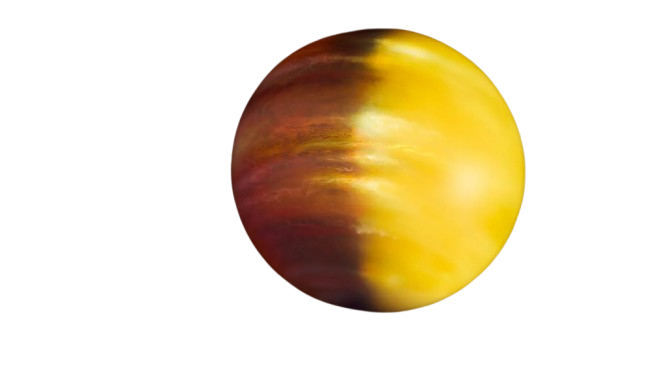
Hot Jupiters : Gas giants that orbit very close to their stars.
Super-Earths : Planets larger than Earth but smaller than Neptune.
Neptune-like : Ice giants with significant atmospheres.
Gas Giants : Large planets predominantly made of hydrogen and helium.
Terrestrial Planets : Rocky planets similar to Earth, typically smaller and more solid.
- Hot Jupiters -
WASP-12b: A particularly extreme Hot Jupiter that orbits very close to its star, experiencing intense tidal forces and atmospheric stripping. KELT-9b: One of the hottest known exoplanets, with temperatures reaching up to 4,300 K (around 4,000 °C or 7,232 °F), making it an intriguing subject for atmospheric studies. HD 209458 b: One of the first Hot Jupiters discovered, often referred to as "Osiris," known for its significant atmospheric studies.
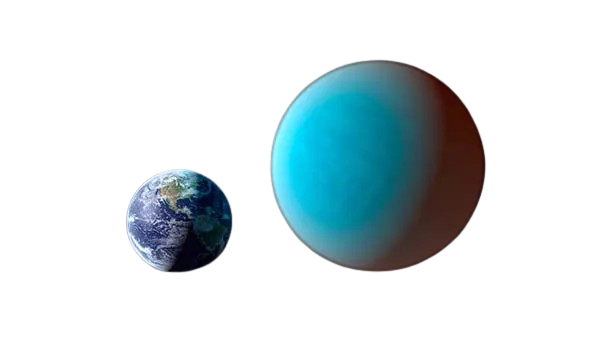
- Super Earths -
Gliese 581d: One of the first Super-Earths found in the habitable zone of its star, raising interest in the potential for life. K2-18 b: A Super-Earth located in the habitable zone of its star, which has been the subject of atmospheric studies, including detection of water vapor. 51 Pegasi b: Although technically classified as a Hot Jupiter, it sparked interest in exoplanet research and led to the discovery of many other planets, including Super-Earths.
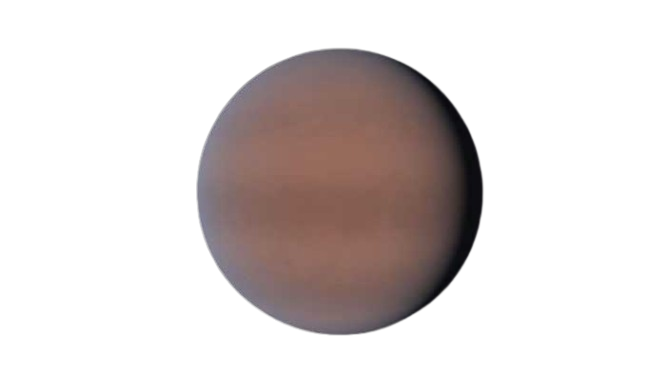
- Neptune Like -
GJ 3470 b: A Neptune-like exoplanet that has been studied for its atmospheric composition and potential for hosting water vapor. HAT-P-26 b: Another mini-Neptune with a relatively low density, suggesting a thick atmosphere. K2-18 b: This planet is in the habitable zone of its star and has been the focus of studies looking for signs of water vapor in its atmosphere.
- Gas Giants -
Gas giants are large planets primarily composed of hydrogen and helium, with thick atmospheres and no solid surfaces. They are characterized by their massive size, low density, and complex weather systems, often featuring storms and extensive moon systems. Notable examples include Jupiter and Saturn in our solar system, as well as exoplanets like HD 209458 b and WASP-17b, which provide insights into planetary formation and the dynamics of other solar systems.
- Terrestrial Planets -
TRAPPIST-1 System: This system contains seven Earth-sized planets, three of which (TRAPPIST-1 d, e, and f) are located in the habitable zone] LHS 1140 b: A super-Earth located in the habitable zone of its star, it offers a great opportunity for atmospheric studies due to its size and relative proximity. K2-18 b: A super-Earth located in the habitable zone of its star, it has drawn attention for its potential to hold water and may have an atmosphere.